The Alchemy of Avant-Garde: How Editorial Fashion Models Redefine Street Style
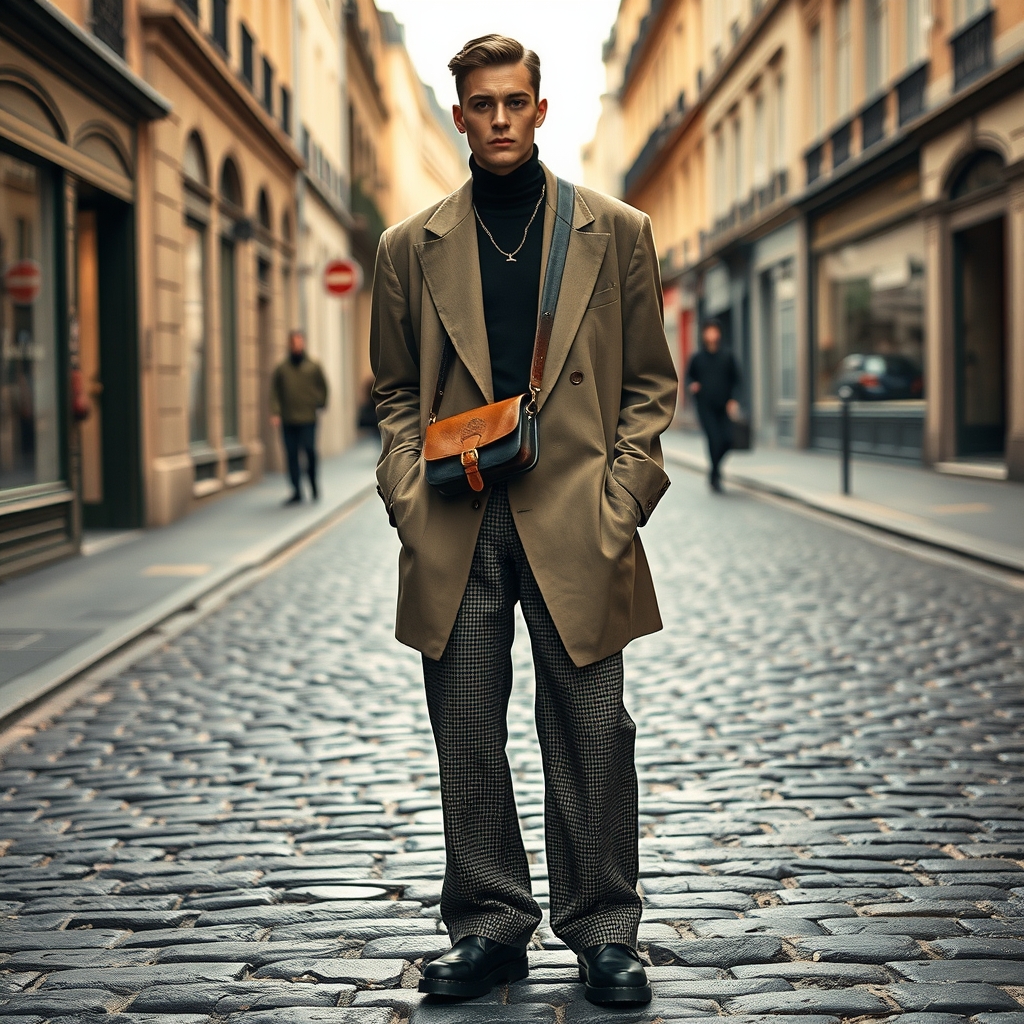
The intersection of high fashion and street style has long been a playground for editorial fashion models, where the boundaries between runway extravagance and everyday wear blur into something entirely new. This is not merely about dressing down—it’s about reimagining the language of fashion itself, where the avant-garde becomes accessible, and the experimental finds its footing in the real world. Models who dominate this space don’t just wear clothes; they curate a visual narrative that challenges conventions while remaining effortlessly cool.
The Runway as a Blueprint, Not a Rulebook
For the uninitiated, the runway might seem like an untouchable realm of fantasy, reserved for garments that exist solely under the glare of spotlights. Yet, the most visionary models understand that the runway is merely a starting point—a blueprint to be deconstructed, reinterpreted, and woven into the fabric of daily life. Take, for instance, the way a supermodel like Adut Akech might pair a voluminous, architectural blazer from a Paris couture show with vintage Levi’s and chunky sneakers. The juxtaposition isn’t accidental; it’s a deliberate act of translation, turning high fashion into a wearable dialect that speaks to the streets.
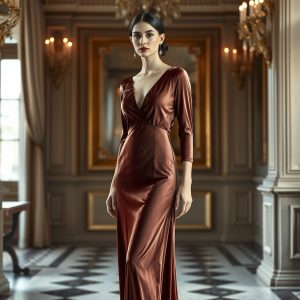
This ability to distill runway looks into something relatable is what separates the elite model from the merely stylish. It’s not about dilution—it’s about distillation. The essence of a garment, its silhouette, texture, or even its emotional resonance, is preserved, while the context shifts. A floor-length gown’s drama might be captured in a sleek, bias-cut slip dress layered over a turtleneck, or the boldness of a couture cape might be echoed in a structured, oversized scarf draped over a minimalist coat. The result? A look that feels both aspirational and attainable, a sartorial sleight of hand that bridges the gap between fantasy and reality.
The Power of the Capsule Wardrobe: Less Is More, But Make It Luxe
In an era where maximalism often dominates the conversation, the minimalist model outfit stands as a quiet rebellion. The capsule wardrobe, a concept beloved by models for its efficiency and elegance, is not about deprivation—it’s about intention. Every piece is chosen with precision, ensuring that each item serves a purpose, whether functional, aesthetic, or both. The luxury model wear that defines this aesthetic is less about logos and more about the quality of the fabric, the cut of the garment, and the way it moves with the body.
Consider the effortless allure of a model like Kaia Gerber, whose off-duty style often revolves around a curated selection of timeless pieces: a perfectly tailored blazer, high-waisted trousers, a crisp white shirt, and a pair of sleek loafers. The magic lies in the details—the way a single statement accessory, like a chunky gold bracelet or a vintage-inspired handbag, elevates the entire look. This approach to dressing is not just about looking polished; it’s about feeling empowered, as if every outfit is a uniform for confidence.
The capsule wardrobe also allows for a level of versatility that is essential for models who are constantly on the move. A single well-chosen piece can transition from a castings in Paris to a casual brunch in Brooklyn with just a few adjustments. It’s a philosophy that prioritizes quality over quantity, and in doing so, it redefines what it means to be stylish in the modern world.
Paris, the Eternal Muse of Model Fashion
No discussion of model style would be complete without mentioning Paris, the city that has long been the epicenter of fashion’s most enduring trends. Parisian model fashion is not just about the clothes; it’s about the attitude—the je ne sais quoi that turns a simple outfit into a statement. The streets of Paris are a living runway, where models like Vittoria Ceretti and Bella Hadid effortlessly blend the city’s rich sartorial history with contemporary edge.
What makes Parisian model style so compelling is its ability to feel both timeless and of-the-moment. A vintage Chanel jacket might be paired with modern, distressed denim, or a classic Breton stripe top could be layered under a bold, avant-garde coat. The key is balance—mixing the old with the new, the structured with the fluid, the minimal with the maximal. It’s a dance between tradition and innovation, and the models who master it become the arbiters of a new kind of elegance.
Paris also teaches the art of subtlety. There’s a reason why the phrase “Parisian chic” has become synonymous with understated sophistication. It’s not about being the loudest in the room; it’s about being the most memorable. A well-placed accessory, a perfectly tailored silhouette, or a pop of unexpected color can speak volumes without saying a word. This is the essence of Parisian model fashion—a lesson in restraint that never sacrifices impact.
The Avant-Garde in Everyday Life
The avant-garde is often perceived as the domain of the runway, a realm where fashion exists as art rather than utility. Yet, the most influential models have always understood that the avant-garde is not confined to a catwalk. It’s a mindset, a way of seeing the world that challenges the ordinary and redefines the possible. When a model like Tilda Swinton steps out in a gender-fluid ensemble or Iris Law experiments with deconstructed tailoring, they’re not just making a fashion statement—they’re inviting the world to see clothing as a form of self-expression that knows no bounds.
This spirit of experimentation is what keeps model street style so dynamic. It’s not about adhering to trends; it’s about setting them. A model’s off-duty look might feature a mix of high-end designer pieces and thrifted finds, creating a dialogue between luxury and authenticity. The result is a style that feels personal, unpredictable, and deeply inspiring. It’s a reminder that fashion is not just about what you wear, but how you wear it—and how it makes you feel.
In the end, the alchemy of avant-garde street style lies in its ability to transform the ordinary into the extraordinary. It’s a celebration of individuality, a rejection of conformity, and a testament to the power of fashion as a form of art. Models who embrace this philosophy don’t just wear clothes; they wear stories, ideas, and emotions. And in doing so, they invite us all to see the world through a more creative lens, one outfit at a time.