The Runway’s Silent Revolution: How Fashion Weeks Are Whispering Change Through Aesthetic Rebellion
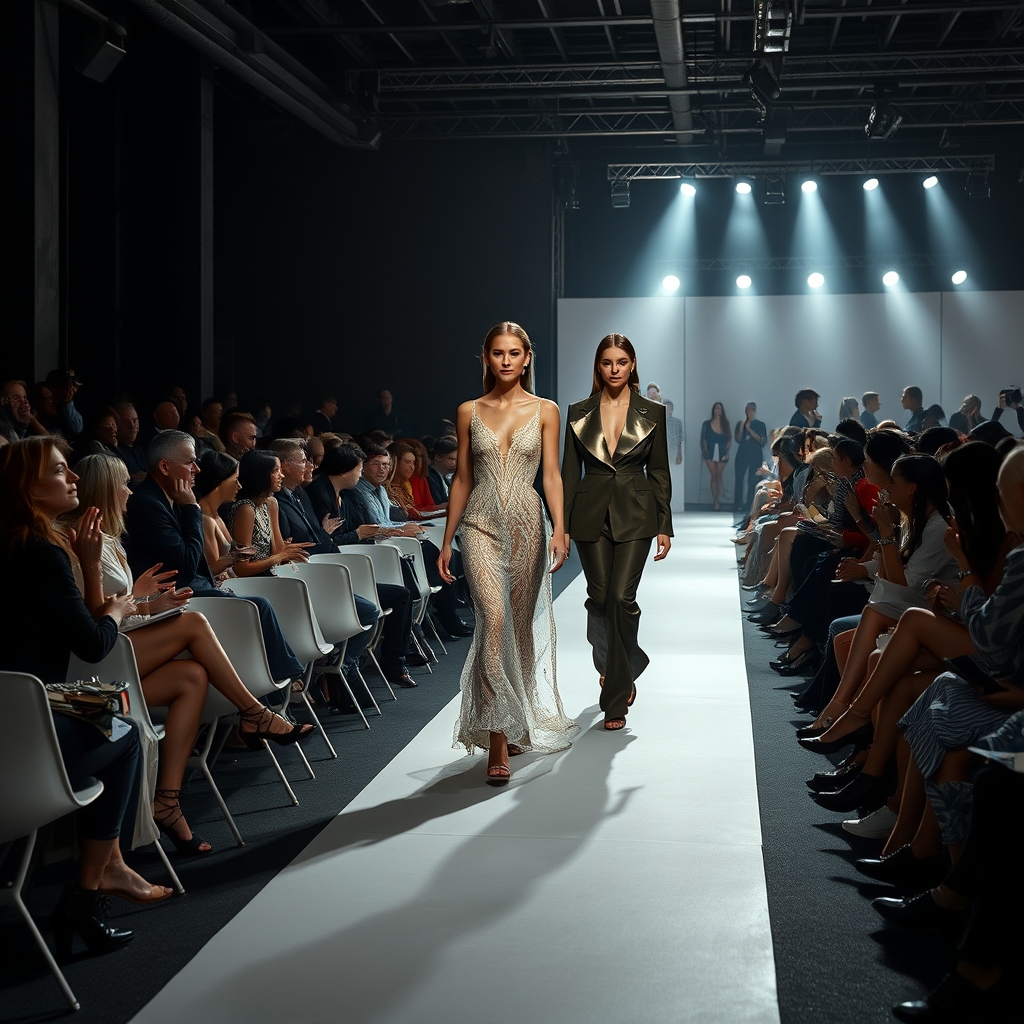
The world of high fashion has long been synonymous with opulence, exclusivity, and a certain unapologetic extravagance. Yet, beneath the glittering surface of Paris Fashion Week, Milan Fashion Week, New York Fashion Week, and London Fashion Week, a quiet revolution is unfolding—one that speaks volumes not through loud declarations, but through the subtle language of runway fashion trends, avant-garde aesthetics, and a redefined sense of purpose. This is not the fashion of yesterday, but a new era where the runway becomes a canvas for storytelling, activism, and reinvention.
The Aesthetic of Rebellion
Fashion weeks have always been about pushing boundaries, but today’s haute couture shows and ready-to-wear presentations are doing so with a deliberate edge. Designers are no longer just crafting garments; they are curating experiences that challenge perceptions. Take, for instance, the rise of sustainable fashion shows, where materials like upcycled fabrics, biodegradable textiles, and zero-waste patterns take center stage. Brands like Stella McCartney and Marine Serre have turned eco-consciousness into an art form, proving that luxury and responsibility can coexist.
The avant-garde runway has also become a playground for experimentation. Designers like Iris van Herpen and Rei Kawakubo of Comme des Garçons blur the lines between fashion and sculpture, creating pieces that defy conventional wearability in favor of pure artistic expression. These collections are not just about clothing; they are about provoking thought, evoking emotion, and redefining what fashion can be. The runway, in this context, is less a stage for models and more a gallery for living art.
The Backstage Alchemy
What happens behind the scenes at a fashion show backstage is often as mesmerizing as the spectacle itself. The chaos of last-minute fittings, the precision of makeup artists, and the choreographed frenzy of stylists all contribute to the magic that unfolds on the catwalk. But beyond the glamour, there’s a deeper narrative at play—one of collaboration, creativity, and the relentless pursuit of perfection.
Photographers and videographers capture these fleeting moments, turning them into visual stories that extend the life of the show far beyond its brief duration. The backstage becomes a microcosm of the fashion industry itself: a space where ideas are born, challenges are overcome, and the unexpected often leads to brilliance. It’s here that the true essence of a collection is revealed—not just in the finished garments, but in the process that brings them to life.
The Front Row’s Evolving Role
The front row fashion has traditionally been a symbol of status, reserved for celebrities, influencers, and industry insiders. But in recent years, its significance has shifted. Today, the front row is as much about representation as it is about prestige. Diversity in seating reflects a broader commitment to inclusivity, with activists, artists, and even climate scientists finding their place alongside traditional fashion elites.
This democratization of the front row is not just symbolic; it’s transformative. It signals a move away from the exclusivity that once defined fashion weeks and toward a more inclusive, engaged audience. When figures like Greta Thunberg or Adwoa Aboah sit front and center, they bring with them a message that fashion is not just about aesthetics—it’s about impact. The front row, in this sense, becomes a platform for dialogue, a space where fashion intersects with culture, politics, and social change.
The Rise of the Virtual Catwalk
The pandemic may have accelerated the shift toward virtual fashion shows, but the trend was already gaining momentum. Digital runways offer a level of accessibility that physical shows simply cannot match. No longer confined to a select few, fashion weeks are now streamed globally, allowing anyone with an internet connection to experience the spectacle in real time. This has opened the door to a new kind of engagement, where audiences can interact with collections in ways that were previously unimaginable.
Brands like Balenciaga and Gucci have embraced this digital frontier, creating immersive experiences that blend fashion with technology. From augmented reality filters to interactive lookbooks, the virtual fashion show is redefining what it means to present a collection. It’s not just about replacing the physical runway; it’s about expanding the possibilities of what a fashion show can be.
Seasonal Shifts: Beyond Autumn/Winter and Spring/Summer
The traditional fashion calendar, with its rigid divisions of Autumn/Winter and Spring/Summer collections, is undergoing a transformation. Designers are increasingly turning to resort collections and pre-fall presentations to keep pace with the fast-moving demands of the industry. These in-between seasons offer a chance to experiment with new ideas, respond to emerging trends, and maintain relevance in an ever-changing landscape.
Moreover, the concept of seasonality itself is being redefined. With climate change altering weather patterns and consumer habits shifting toward year-round shopping, the idea of a fixed fashion calendar feels increasingly outdated. Some brands are even abandoning the traditional schedule altogether, opting instead for a more fluid approach that prioritizes creativity over convention. This shift reflects a broader movement within the industry—one that values agility, innovation, and a willingness to break the rules.
The Model as Storyteller
The model runway walk has evolved far beyond the stiff, robotic strides of the past. Today’s models are storytellers, bringing emotion, personality, and even activism to the catwalk. Whether it’s Adut Akech’s regal presence, Paloma Elsesser’s unapologetic confidence, or Aaron Philip’s trailblazing representation, models are using their platform to challenge norms and redefine beauty standards.
This shift is particularly evident in the rise of gender-fluid and non-binary models, who are breaking down the binary constraints that have long dominated the industry. Designers like Harris Reed and Telfar Clemens are championing this movement, creating collections that celebrate fluidity and self-expression. The runway, in this context, becomes a space for liberation—a place where fashion is not just seen, but felt.
The runway has always been a stage for dreams, but today, it’s also a mirror. It reflects the world as it is—messy, diverse, and constantly evolving—while simultaneously offering a glimpse of what it could be. The quiet revolution unfolding across Paris, Milan, New York, and London is not about loud proclamations or radical overhauls. Instead, it’s about the subtle, persistent changes that are reshaping the industry from within. Fashion weeks are no longer just about what’s next; they’re about what matters. And in a world that’s increasingly fragmented, that might just be the most powerful statement of all.